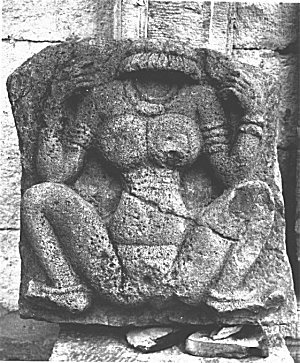
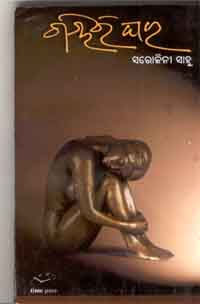
Thursday, September 25, 2008

THE MARITAL PRACTICE & FEMINISM(II)


The Vagina Monologues is the famous episodic play of America ,written by Eve Ensler,which ran at the off-Broadway Westside Theatre and at HERE Arts Center in 1996. Later a television version featuring Ensler was produced by cable TV channel HBO . It has been performed in 76 countries .In 2003 it was first performed in India (Mumbai) and was produced by Poor-box productions .In 2004 , it was banned in Chennai . The play was translated into Hindi and was first performed in January 2007 under the title of “Yoni ki baat”. Ensler made up of a different monologues read by a different women. Initially, Eve Ensler performed every monologue herself, with subsequent performances featuring three actresses, and more recent versions featuring a different actress for every role .Later she turned it to perform annually and a new monologue is added to highlight a current issue affecting women around the world. Every monologue somehow relates to the women, be it through sex, love, rape, menstruation, mutilation, masturbation, birth, orgasm, the variety of names for the physical aspect of woman’s body. A recurring theme throughout the piece is the vagina as a tool of female empowerment, and the ultimate embodiment of individuality. In 1998, Ensler announced to change Valentine Day to V-Day stands for Vagina, Violence , and Victory, linking love and respect for women to ending violence against women and girls.
The Vagina Monologues as having a negative and restrictive view of sexuality and an anti-male bias impose a stress on hatred at men and heterosexuality. I have marked , in Western , many feminist thinkers oppose male-female sexual relationships .They describe it as negative and destructive to women, whereas all female-female sexual relationships, even one including statutory rape, are depicted as positive and nurturing .In "The Little Coochie Snorcher that Could”, an episode from Vagina Monologue, a thirteen-year-old girl recounts being given alcohol and then having sex with an adult woman; the incident is recalled fondly by the grown girl, who closes the monologue with the line, "If it was rape, it was good rape." Later, the "good rape" line was removed from the script, the girl's age was changed to sixteen, and warnings were issued to individuals putting on the play that using older scripts containing the line constituted a copyright violation and was grounds for legal action.
For many feminist thinkers, after marriage a family breeds patriarchy. Happily married women are considered false and double-crossing. The titles of popular feminist books from the early movement highlight the split between gender feminists and women who chose domesticity. Jill Johnston in her Lesbian Nation (1973), called the married women are heterosexual females 'traitors'; Kate Millett in her Sexual Politics (1970), redefined heterosexual sex as a power struggle;whereas in Kathrin Perutz's Marriage is Hell (1972); and Ellen Peck's The Baby Trap (1971), they argued motherhood blocks liberation of a woman . These feminists always try to paint the marriage as legalized prostitution; heterosexual intercourse as rape; and they come to the decision that men are the enemy; families are prisons.
In my last article, I have shown how these feminists (Betty Friedan, Germaine Greer ) have tried to skip from their anti marriage ideas in later period . Marriage is a three-sided arrangement between a husband, a wife and the society. That is, the society legally defines what a marriage is and how it can be dissolved. But marriage is on the other hand for partners of marriage, It is more of an individual relationship than a social matter .This is the main reason of crisis .Individually I think, marriage must be taken out of the social realm and fully back into the private one. The society should withdraw from marriage and allow the adults involved to work out their own definition of justice in the privacy of their own homes.
Our feminist thinker always tries to skip the idea that offspring begging is a natural instinct of a woman and it is related to our ecological and environmental situation .Anything against it may resulted to disaster ,We find , a woman has to pass through a different stage in her life span and there is a phase where a woman feels an intense need of her own offspring .Feminists of second wave feminism have always tried to pursue a woman against the natural law because it is seemed to them that motherhood is barricade for the freedom of a woman . But if the woman has her own working field , doesn’t have it mean that her working assignments would demand more of her time ,of her sincerity and of course of her freedom ? If a woman can adjust herself and can sacrifice her freedom for her own identity at out side her home, then why she shouldn’t sacrifice some of her freedom for parenting, when parenting is also a part of one of her social identity ?And it could also be solved by rejecting the patriarchal role of parenting, .We have to insist the idea of the division of labor in parenting .This equally shared parenting is now common in Western ,but still in South Asian countries we find it as a taboo factor rather because of economic inequality between men and women, our crazy work culture, and the constrictions that are placed on us by traditional gender roles.
Still in India, in majority cases it stands in sharp contrast to the traditional marriage with children, in which the man works and the woman stays home, or the ‘supermom’ marriage, in which the man works and the woman tries to balance a career with the lion’s share of the childcare and household tasks. Equally shared parenting is more than an extension of feminism; it is more than simply what is fair. Equally sharing the care of your children with your partner is about balancing your life, balancing your family's collective life and sharing equally in the joys of raising a family.
We again came to that point where we have to agree with the theory which states that economic inequality between men and women are the main barricade to solve the gender inequalities and not the marital practice or motherhood, as the Western feminist always tries to paint. Our motto should be to change our marriage system out of the political realm and fully back into the private one. The new slogan of feminism should be 'the personal is personal'

Monday, August 25, 2008


THE MARITAL PRACTICE & FEMINISM (I)


“When a subject is highly controversial —and any question about sex is that —one cannot hope to tell the truth. One can only show how one came to hold whatever opinion one does hold. One can only give one's audience the chance of drawing their own conclusions as they observe the limitations, the prejudices, the idiosyncrasies of the speaker” (A Room of One’s Own : Virginia Woolf, 1929).
The word chastity refers to sexual purity and in Eastern ethics it is always linked with only woman and only with her self-denial of sexuality, tolerance, submissiveness and with an idea that here is no greater God than her husband .Never any question is asked or discussed any day on man’s chastity , neither in Western nor in Eastern world.Quaran though allows polyandry for man but it does not allow that right for a woman and so as to the Christian Churches also deny polyandry for both man and woman and so also Hindu/Buddhist and other religions are categorically denied the sexual rights of a women .In every society ,it is hoped that a woman should keep her chastity pure .Our society possess a prejudice idea that women are more loose than men and so some 220 words exist in English for the sexually promiscuous woman, but only 22 for promiscuous men . (See: Feminist Theory. Allan Hunter. Jan. 2003. http://home.earthlink.net/~ahunter/Extended essays )
Here I will discuss about only our Eastern traditions In India, with its strong bent for tradition, woman was expected mainly to live for others than for herself because "others" controlled and moulded the social structure. Even woman in life and literature herself voluntarily surrendered to the ideal of self-sacrifice..Once a writer Meena Shirwadkar writes : “Sita (Ram’s wife in Hindu epic Ramayana ) exemplifies the behaviour of the proper Hindu wife, devotedly following her husband into forest exile for twelve years, and eventually, after being kidnapped for a time by the evil Ravana whom Rama finally destroyed, proving her wifely virtue by placing herself on a lighted pyre. In some part of India, the women yearly worship Savitri, a goddess whose renown emanates from her extreme devotion to her husband, through which she saves him from the god of death. The story of Savitri is held up as a prime example of the lengths to which a wife should go in aiding her husband. The good wife saves her husband from death, follows him anywhere, proves her virtue, remains under his control and gives him her power.” ["Women and the Hindu Tradition,"in Women in India (New Delhi: Manohar, 1986), 122-123]
In Hindu mythology Anasuya has been considered as Mahasati or Great Chestwive .According to Garuda Purana , being criticized by her leper husband Kaushika , she still considered him her deity and once instructed by her husband she took him to a prostitute ,carrying also a lot of money and asked the prostitute to allow her husband to sleep with .
Since the old Sangam Period in South India, we find literature is used to glorify chastity of woman ( “karpu” in Tamil) .In “Silappatikaram , the famous Sangam Epics (Professor A.L.Basham has translated this epic in English) Kannagi, the eternally suffering chaste wife who bore her husband`s unchasteful behavior and killed herself after her husband’s assassination by the king and went to Heaven to reunite with her unchest husband.This is the value of Indian partichal society posses on sexual purity in marital life
Once I read in the Asian Human Rights Commission’s report that a woman in Rajasthan was found bleeding from her thighs, causing injuries due to her chastity belt. The use of chastity belt is not common in India and it was also not originated in India .It appeared in Italy under Francesco II from Carrara and was mostly used in Italy, but it suddenly spread all over France as well. Some argued that the instrument aimed at preventing women from the possible risk of being raped, when their partner was away for a long time. It was also presented to a woman by her husband or lover in order to encourage her to be faithful.The patriarchal society always have double standard and the concept of such chastity belt may be the suitable example of their conspiracy .It became worse when widows were forced to burn with their late husbands on their funeral pyre in the name of “Sati System” in ancient India .Though this system is now prohibited by law , but few years ago when a 20 years old widow “Roop Kanwar” dragged to pyre of her demised husband ,the question agitated the modern Indian mind that the roots of patriarchal hegemony is still deep rooted any where in our cultural context .
Sexual purity is always clung with purity of love .It is always considered that sex is always mingled with love . In Oriya Mahabharat written by Sarala Das , it is stated that Draupadi had infatuations with Krishna and Karna ,the later was the illegitimate brother of Pandavas.Draupadi had sexual relations with five brothers of Pandavs , but still her heart was running after Krishna and karna .This is I think the real picture of a woman’s heart .For a woman the meaning of sex is very different from that of the man and I have discussed these matters earlier in my blogs.
The Hindu scholars might have forgotten that in Hindu mythology there are many examples of “free woman” over these “chaste woman”. There was no moral condemnation or belittling of “free women”, and they also married and had children, but with a different social and familiar context.
They were largely considered on a par with men (not only with their men but with all men), not subject to father, husband and son, and rather they were very respected in society They were generally very learned, and normally sitting in public assemblies with men to discuss about the state’s affairs. Many kshatriya
ladies, even of royal families, were in this category. One of very known scripture in Sanskrit was that :
Ahalya Draupadi Kunti Tara Mandodari tatha
Panca kanyd smarennityam mahdpataka nasanam

Ahalya Draupadi Kunti Tara and Mandodari are five characters in mythology considered as the famous “Pancha Kanyas” (five Virgin) and interestingly enough none of them were monogamous (I have discussed about their relationship in my earlier blog
PLEASURE AT PAR . So the status of these five free ladies was not lesser than that of Sati, Savitri or Anasuya .Actually Hinduism is not a religion in which sense Greco-Semitic religions are .It is a cluster of ideas, philosophy and life styles .Here, every contradictory ideas may remain side by side claiming there authenticity .The most atheist Charvak is also considered as a great sage in Hindu cult .So, it is foolish to blame Hinduism for any particular idea .I think Hinduism allows all to lead their life according to their own belief and it respects and regards all type of lifestyle .Hence, it is the time when we can think over the “free woman” status in our Eastern society to check the patriarchal dominancy over female world.
Opposite to monogamy the heterosexual relationships are a multi termed activities such as polygamy,polyandry,polygyny and polyamory . "Polygamy" is a marital practice in which a person has more than one spouse simultaneously “polyandry” refers to a form of polygamous marriage, or other sexual union, in which one individual is married to two or more husbands at the same time. “Polygyny”, on the other hand, refers to polygamy in which one man has two or more wives.
Monogamy is always a double standard activity by masculine world. It is deliberately an extremist idea which is built into its core rule that men can have multiple spouses but women cannot. Even worse, traditional polygamy is always used by the masculine world to exploit feminine world sexually . Women these days expect and demand to have the same standing in relationships as men. To which polygamy denies and women find a lesser status in such traditional polygamy .Either the polygamy turns to polyandry , where a single woman is sexually used by men or very soon she is rejected by her lover .The purity of love and the emotional bondage does not act in mono gamy . On the other hand , by allowing monogamy we make ourselves confined to a double standard system created by masculine world .The traditional monogamy once made the ‘widows’ to lead a torment life , wearing white sari, adopting vegan food habits and leaving all sorts of feminine aestheticism in the name of “satwik” life where as there was no such rules for any widower any day .
The poet Ezra Pound once observed (somewhat self-servingly) that artists are the "antennae of the race." These antennae have long been jolting about extramarital affairs. It seems that every great literary tradition, either in the Eastern or in the Western world, finds it especially fascinating to explore monogamy's failures.The old Western epics like, Homer's Iliad, recounts the failure of monogamy : Helen's face launched a thousand ships and changed the course of history only after it first launched an affair between Helen, a married woman and Greek queen, and Paris, son of King Priam of Troy. Helen proceeded to leave her husband Menelaius, thereby precipitating the Trojan War. And in the Odyssey, we learn of Ulysees' return from that war, whereupon he slays a virtual army of suitors, each of whom was trying to seduce his faithful wife, Penelope. Some of the examples modern classics from Western literature are : Tolstoy's Anna Karenina, Flaubert's Madame Bovary, Lawrence's Lady Chatterly's Lover, Hawthorne's The Scarlet Letter, Henry James' The Golden Bowl. And even in later period, we find John Updike and others.
Now one can ask a question, is it possible to have in love with more than one person at a time ?The traditional answer may be “NO” , but if we think over the issue more seriously we can have an affirmative answer . Virtually human heart is a multi chambered space where every chamber is allotted to a person .We have kept reserved space for our spouse,parents,children,relatives,friends, neighbours and even for our colleagues and if we can equally love them, it is doubtless that a person can’t allot any more seats for ‘lovers’ . In 1983, Blumstein and Schwartz tried to survey 3,574 Western married couples in their sample and found 15-28% had "an understanding that allows non-monogamy under some circumstances. The percentages were higher among cohabitating couples and they even found the percentages were higher among cohabitating couples (28%), lesbian couples (29%) and gay male couples (65%)" [As cited in Rubin, A. M., & Adams, J. R. (1986). Outcomes of sexually open marriages. The Journal of Sex Research, 22(3), 311-319]
In 1999, Morning Glory Zell-Ravenheart was asked by the editor of the Oxford English Dictionary to provide a definition of the term (which the dictionary had not previously recognized). The words "polyamory/ous/ist" were formally added to the OED in 2006. The Ravenhearts defined and expanded the term as follows:

“The practice, state or ability of having more than one sexual loving relationship at the same time, with the full knowledge and consent of all partners involved.

This term was meant to be inclusive, and in that context, we have never intended to particularly exclude "swinging" per se, if practitioners thereof wished to adopt the term and include themselves. The two essential ingredients of the concept of polyamory are more than one; and loving. That is, it is expected that the people in such relationships have a loving emotional bond, are involved in each other's lives multi-dimensionally, and care for each other. This term is not intended to apply to merely casual recreational sex, anonymous orgies, one-night stands, pick-ups, prostitution, "cheating," serial monogamy, or the popular definition of swinging as "mate-swapping" parties. Swinging, sometimes referred to as the swinging lifestyle, is non-monogamous sexual activity, treated much like any other social activity, that can be experienced as a couple. ... Whore redirects here. ... “ (Source Wikipedia) .

Polyamory is a word which often confused with polygamy and polyandry .In Hindu epic Mahabharata , the Pandavas are married to one common wife, Draupadi.What would I say to it ?Polyandry or Polyamory ?It is a strange fact that no body asked Draupadi about her wish before her such marriage . Except Robert Heinlein's science fiction The Moon Is a Harsh Mistress, I haven’t found any instance of any Plyamory relationships neither in our myths, epics or in modern literature in both Western or Eastern society. In movies , ‘Three of Hearts: A Postmodern Family’ is a 97 minutes long Susan Kaplan’s film , starring with Steven Margolin, Sam Cagnina (II), and Samantha Singh and was shown in Miami International Film Festival in March of 2005 under Documentary Film Section is considered to be only one of its kind on Polyamory .
Neither in the East or West, the society never allows this type of relationship as still the patriarchal claims over woman as a property exists in any hidden form. The orthodox Christian and Islam beliefs still prevailed in the society of both Eastern and Western world .Quaran though allows polyandry but it does not allow polyamory and so as to the Christian Churches also deny both polyandry and polyamory .In every society ,it is hoped that a woman should keep her chastity pure .In modern Indian society, though this practice is being prevailed , except the eminent poetess Amrita Pritam , no body could dare to accept this relationship publicly.
Not much is also known by the psychology field concerning polyamory. Our textbooks on family functioning don't mention it, our diversity literature doesn't incorporate it, and many members of the polyamory community have reported encounters with therapists who are uninformed at best, or biased at worst, about this lifestyle . Geri D. Weitzman, a social psychologist , who claims herself as a polyamorous woman, presented a paper at the 8th Annual Diversity Conference on March 12th, 1999 in Albany, New York, where she tried to prove that the negative view of polyamorous individuals that some therapists have expressed is borne out by empirical data and added that polyamory is a valid and healthy lifestyle; however, just as there are stressors associated with being gay or bisexual in a heterosexual society, so are there stressors associated with being polyamorous in a monogamous society ?


Saturday, July 26, 2008

Raja Ravi Verma’s painting of Sakuntala, the prime character of Abhijñānaśākuntalam by poet Kalidasa . Sakuntala is the lady to whom her mother Menaka left after being realised that she could not rear her daughter. (Source : Wikipedia )


MOTHER-DAUGHTER CONFLICT

To compound matters, I had a tempestuous relationship with my mother, and feared the inevitable kickback sure to follow such a final and dramatic departure from daughterhood. What if, instead of joy and excitement, my mother felt threatened by the baby, and pushed even further into the margins of my life? What if, then, out of jealousy and her own discontent, she launched covert or not-so-covert strikes against my irrefutable separateness, now symbolized so completely by becoming a mother myself?
Because mothers make us, because they map our emotional terrain before we even know we are capable of having an emotional terrain, they know just where to stick the dynamite. With a few small power plays—a skeptical comment, the withholding of approval or praise—a mother can devastate a daughter. Decades of subtle undermining can stunt a daughter, or so monopolize her energy that she in effect stunts herself. Muted, fearful, riddled with self-doubt, she can remain trapped in daughterhood forever, the one place she feels confident she knows the rules.
(Excerpt from Rebecca Walker’s Baby Love : Publisher: Riverhead Books : 2007)
The conflict between American mother-daughter feminists Alice Walker and Rebecca Walker is well known chapter for Western feminism . Alice Walker , the mother , the second wave feminist , obviously had an anti mother hood ideas as the other western feminists of her time .But Rebecca Walker, her daughter and a feminist of third wave discussed in her book ‘Baby Love’ about how motherhood freed women like herself from their roles as daughters, and how this provided the much-needed perspective to heal themselves from damaged mother-daughter relationships and claim their full adulthood. What happened? This latest article is mired in unresolved childish hurt and anger (especially in the chapter “How my mother’s fanatical views tore us apart”), which would be all well and good except that she strikes out at her mother by striking out at feminism. I personally think, the bitterness between her and her mother, as any woman who has ever fallen out with her mother knows, it is a very painful experience and note to self, one that probably shouldn’t be written about too much in public.
In her book Baby Love, Rebecca Walker writes directly about unadulterated excitement and pride about becoming a mother .Rebecca argues that motherhood frees us from childhood, it is the most important step a woman can take because it creates another human being and because it makes a woman an adult. I found this to be true for myself .In one of my story AMRUTA PRATIKSHA RE (Waiting for Manna )(1989), published much more before the Baby Love, where I want to discuss the queries after a lifetime of wondering whether to have children, wondering if the sacrifices are worth it, wondering if life is full to bursting enough already - how does our generation of women decide to have children?
Though I find myself nearer to Rebecca than to Alice on mother hood topic and I have told before that the motherhood-sexuality conflict is created by only Western Feminist, but for me Alice and Rebecca’s conflict is a different issue from these motherhood-sexuality (or to say Feminism) split .The conflict of mother and daughter sometimes creates the discomforts of their inequality by falling back on the motherhood mystique .
It is also a strange fact to note that Alice Walker always tried to avoid the conflict between her and Rebecca, in public. I think, the conflict between the two personalities is not due to theoretical inclination but rather due to a personal and psychological reason. Rebecca is a bisexual and was known for her relationship with Meshell Ndegeocello, but she became pregnant with her boy friend and as a mother Alice perhaps couldn’t bear this status .There are always hidden expectations on both sides. A mother has some expectations by which she tries to measure her daughter with that scale . She always wishes her daughter to be disciplined and bar her daughter to do all those activities which she has not done in her life. Similarly, a daughter has also some expectations from her mother and she always thinks her mother too old to lead a personal and being youthful getting attention from the public .These opposite polar thoughts make both mother and daughter to possess ambivalent love/hate relationship.

There are competitions and jealousy which operate between every mother and her young adult daughter .They have tendencies to deny each other’s private lives .I don’t know practically what is the relation between mothers and daughtes in Western Culture .I find ,it is quite natural for a family in Western world , where a girl could invite her boy friend to their home .But in Eastern world, such possibilities are very rare happenings and though the urban upper middle class people allow love marriages but still dating of their daughter with her boy friend always makes the parents to keep the news secret from the society and a girl can’t dare to invite her boy friend to their drawing room .In such cases, it is a normal phenomena that a girl couldn’t imagine her mother would have any extra marital relationship or her mother would have any boy friend .On the same time a mother also always dislikes to find her daughter spending more times over phone talking to any stranger . The fashionable dresses or make ups may also create jealousy in a mother’s mind But this is not all. I have witnessed a good friendship between mother and daughter, where the mother tries to make her failure dreams through her daughter and we see a very unstylish mother tries to make her daughter more fashionable and smarter . In one of my story AGNEYA GIRI (Volcano) I tried to paint such type of psychological agony of mother daughter conflicts/.friendships.
The relation between a married daughter with her mother even more critical, fragile and competitive . The married daughter always considered by her mother as ‘other’.The mother and the daughter have two different families and there concerns are also different and hence more to sharing the utilities an undecided jealousy also develops in the same time .But no way this is any final statement to say that the ‘love’ between mother and daughter is in diminished stage after the marriage of the later..In total scenario of Rebecca’s blaming her mother depicts the jealousy , where Alice’s mature mind as well as the ‘love’ for her daughter’s carrier made her to avoid these tactfully from the public .
The mother of a young adult girl had been to pass through two phase, a girl hood and also a daughter in law hood and at this phase she finds herself nearer to the white haired aged woman and is about to enjoy all freedoms those are meant for masculine world . So when she thinks over her daughter’s future life she tries to mould her daughter to cope herself in daughter in law hood environment without suffering in any socio-psychological setback.

The social structures in Eastern world demands the girl to act more as a daughter in law in a family than to a wife of some one .So, unlike to Western girls the south Asian girls are commonly depicted as requiring veiling and modesty. There are dress decorum, speech censorship and even the movement restrictions. For the married woman (in case of daughter in law) , they have to cover their heads while appearing to any stranger or elder person and few decades back, in the rural areas , they were not allowed to roam on the village lane but one can see the rules were not so strict for the unmarried girls and for the older woman., who left their homes to roam village lanes with their heads and faces uncovered .Even the white haired aged women can roam publicly baring to the waist on hot days, without regard for showing their long-dry breasts. The younger adults’ views of older women as having the power to limit a daughter-in-law’s movements, to interfere with a son’s marital intimacies, and the like; yet the older women usually speak of feeling that they were losing in the contest for a son’s affection, loyalty, and favor. Indian widowhood rarely distinguished between the consequences of widowhood for a woman in her youth and for a woman past menopause, although one can find striking differences. Older women were, in important ways, “like men,” implying that what differentiates a “man” from a “woman” is not constant over the life course. This is I think a different social scenario, which makes South Asian Feminism a distinct different from that of Western.
The Western Society has been changed a lot since Jane Austen’s “Pride & Prejudice”. Rather we can find the similar society that the novel depicted in Asian countries where the daughter’s marriage is still remains with the parent’s responsibilities. In The Joy Luck Club (1989), by Amy Tan, the characters Suyuan and June have a mother-daughter relationship fraught with conflict, but ultimately rooted in deep love and commitment for one another. Amy Tan , Chinese American immigrant writer also focuses on mother-daughter relationships in her another novel The Kitchen God's Wife .In my two of short stories AGNAYAGIRI (Volcano) and DUKHA APRAMITA (Sorrows Unending ) I focus on the mother daughter relationship .But in Western contemporary fictions the mother and daughter relationships appear on totally another dimension to which it is difficult to accept for an Eastern mind .For example in the novel ‘The Horse Whisperer’ by Nicholas Evans ,the mother Annie falls in love with her daughter Grace’s fiancé Tom .Relationships change due to mishaps such as accidents leading to physical disabilities. In the novel, The Horse Whisperer by Nicholas Evans, the relationship between a mother daughter change drastically for the better after the daughter is burdened with a physical disability and it creates a lot of mother daughter conflict .This type of conflict though would not be ruled out in Eastern social scenario, but I think the Mother-daughter conflict sources and responses among Western families are still not well understood. Conflict sources were mothers' unsolicited advice, daughters and mothers not living up to expectations of the other, and daughters' independence of mothers. Responses to conflict included voicing concerns, displaying loyalty, and utilizing the assistance of family. That is why the conflict between Alice walker and Rebecca Walker is discussed, and suggestions for future research on mother-daughter conflict within the Western context are provided.


Friday, June 27, 2008

Paintings of Lilith by John Collier, 1887
(The Atkinson Art Gallery, Southport, England)


MOTHERHOOD & SEXUALITY

In Chapter 1, 27 of the book of Genesis of Old Testament , woman was created together with man, and in the image of God like him. But it is again cited in Chapter 2, 22 of the same book that woman was created after man was created, and not from "the dust of the ground" like him, but from the man's rib .In attempt to explain this contradiction, Jewish tradition claims that the first woman was Lilith - a woman who was man's equal and devilish in her sexuality. Since she and man were fighting constantly, she left him and was copulating in deep waters with demons. Lilith refused to return to man even when God threatened to have a hundred of her offspring die each day. Eve, man's second woman and was created from a rib because the rib is the most modest part of the body.Thus the split between motherhood and sexuality has been revealed the deep ambivalence that characterizes the two contradictory perceptions of a woman: A woman can either be motherly like Eve and then is pure, virgin, holy, and a support for her husband, or she can be sexual like Lilith, and then she is sinful, devilish, lacking any maternal instincts.This idea still has been continuing in our society that more sexual a woman is perceived to be, the less she will be evaluated as a good mother.( See journal article by Ariella Friedman, Hana Weinberg, Ayala M. Pines; Sex Roles: A Journal of Research, Vol. 38, 1998 )According to Christopher L.C.E Witcombe , the legend of Lilith merges with the earlier legend of Sumero-Babylonian origin, dating from around 3,500 BCE .
In patriarchal values there might be duality between sexuality and motherhood and Lilith and Eve were two symbolic characters to represent patriarchal ideas on Motherhood.
In first wave and second wave feminism , all feminists share a belief that women are enslaved by domesticity and defined by their roles as mother and wife . . Betty Friedan called the family a 'comfortable concentration camp',
According to Simone De Beauvoir , the myths of women are created by masculine world and these myths (such as the myth of the mother, the virgin, the motherland, nature, etc.) attempt to trap woman into an impossible ideal by denying the individuality and situation of all different kinds of women . Simone was against the motherhood and even against the marriage. It is no doubt that Feminism was influenced by Marxism for a long time .Simone was influenced by Hegelian ‘others’ theory and for a long time indirectly Hegel, Marx and Engels lead the feminist movement . Marx's early thinking was greatly influenced by that of Hegel and Feuerbach, characterised by idealism and humanism. The very concept of alienation came from idealist thought of early Marx, where he broke radically with every theory that based history and politics on an essence of man .The idea of commune concept developed by later Marxist activists was also based on this alienation concept where the idea of family structures and mother hood responsibilities were denied. Marx believed that history was "determined" by changes in the relationship of production and consumption, and consumption was often a product of rhetorical pressures imposed by ideologies, which created a "false consciousness." But in due course it is observed that one should not judge every human activities with production and consumption factor and the relationship of mother and her offspring are the first example to refuse that production and consume theory.
In this prospect, I have to remember Simone again .She was some how influenced by Marx (or to say pro Marxian Hegelian theory) .She categorically denied Motherhood
Betty Friedan wrote The Feminine Mystique in 1963 , where she argued for abolishing the family , but in 1981, she again wrote The Second Stage , where , she explained that her theories had been misunderstood. Friedan asked for a reconsideration of marriage. She pleaded for feminists to move away from anti-family rhetoric and back to a dialogue that addressed the needs of most women, who were wives and mothers. She called for a humanistic evolution that would enrich the institution of the family by including the needs and desires of men in the picture.
In the '70s Germaine Greer encouraged women for the revolutionary breakdown of sex roles . With her outrageous and shocking language, she proposed that women should refuse to marry .Being married ,there might be every chances for a woman to become a subject for her role as a commodity in a capitalist society. But in a later book, however, Greer forthrightly defends a more traditional version of the family. She accepts the idea that a husband, wife and children constitute the basic familial unit.
Sexuality of a woman no doubt is repressed by motherhood because the sexual drive calls for active and immediate need gratification; motherhood requires sacrifice passivity and postponement of gratification. But sex is not all for either in the life of man and woman .Motherhood brings some feminine sensuality which a woman can’t rule out from her life. Desire for children is a feminine sensibility and while considering all aspects ,we should not overlook the emotional suffering of infertility, pregnancy loss, or stillbirth bear sorrows of a female .It is true that motherhood makes a female limited to her sphere temporarily within the four wall of the home and in pot natal period, she has to take charge of child rearing and who does not know that men are irresponsible and unbelievable when it comes to child care and housekeeping in India, a female has to bear financial loss at her work place due to her pregnancy in unorganized private sector. Personally I believe that all the theories made by the second and third wave Western feminists on motherhood are denying women a basic choice about their womanhood and about their lives.I have marked, in the growing trend of Feminism , the western feminist thinkers like Simone, Friedan , Greer and even Linda Hirshman have a tendency to make feminism equal to the status of patriarchal role .Patriarchal role in society is a devilish tradition implied by the masculine world and our attempts should not be to create another social milieu of exploitation and injustice .Feminism does not aim to destroy the family structure or to attack on the emotional bondage of love and passion .The motto of feminism should to create a new world with a new perspective of equality and humanist attitude.Feminism must be a road to glorify female role with their own sensibilities .So , we can admit that being a mother is one of the most important jobs in the world , but we should also confirm that motherhood is not only the not the only “choice” available to women.It should be confined to the ability of woman to say "yes", as well as "no", to having children.In South Asia, motherhood is always mingled with a religious and social goal of patriarchal society and is not subjected to a woman’s wish but of man’s. In Hinduism a ‘son’ is the must requirement for a man to achieve his personal ‘moksha’ after his death.So the Manu Smruti stresses upon “putrarthe kriyate bharya”, which means a wife is required to bear sons .This is the most insulting status of a woman in Hinduism and for that an infertile woman losses her status in her family as well as in society.An infertile woman is treated like a widow and is barred from any social rituals and many orthodox Hindus in rural areas still believe that encountering an infertile woman at morning is a bad sign for the whole day. So, while discussing about mother hood in South Asian perspective, we should not forget this status quo.

But still I believe, the motherhood and sexuality is so closely connected in women's experience and of women's gender identity that the idea of split between them is only false myth woven by the patriarchal society.

Monday, May 26, 2008


( The sculpture of ARDHANARISHWAR at Khajuraho Temple,India)

PLEASURE AT PAR

There is a misconception among Indian feminists that in ancient days , the women were observing their fundamental rights including the right over their own body and mind ।The mythical characters like Kunti,Madri,Mandodari,Draupadi are often referred for their polygamist activities .But are they truly adopted polygamy for their own will ? Vyasa’s Mahabharata tells us about the strange traditions of ‘niyoga’ in which a woman was allowed to have sexual meetings for bearing of offsprings. This custom was allowed because in Hindu beliefs a son is the most needed for a man. He could not go to heaven unless he would have a progeny .That is why Ambika and Ambalika were forced to have intercourse with their brother in law Vyas .Pandu, the husband of Kunti was a strange psychic person.He was an impotant and his sexual frustration made him to marry two wives Kunti and Madri and perhaps this sexual frustration revealed by the story of Pandu later killing the two deer engaged in coitus – an action that was condemned for all. To raise offspringshe forced his two wives to have offsprings from different gods .
In Mahabharat neither any of female characters had chosen her lifemate by their own will. Satyavati did not choose Shantanu as a husband, nor did her daughters-in-law, Ambika and Ambalika. Gandhari was forced into marrying Dhritarashtra. Madri again did not become Pandu’s wife on her own choice. Draupadi was won through a contest of skill and might – she did not personally pick out and chose Arjuna in her svayamvara. Uttara was offered to Arjuna as a wife, but he accepted her as his daughter-in-law, more on moral grounds than any other, a choice which could very well have been against Uttara’s desire, though the epic contains no echoes of her feelings against the choice. That is five generations of daughters-in-law coming to the Bharata family as queens.
On the other hands, despite of having a wife like Draupadi, the other heroes like Arjuna and Bhima got married Subhadra,Chitrangada,Hidimba but they never enjoyed the position of an official wife .
Kunti was forced to begot her three children from different sperm donor gods, but never any day she could claim Karna , to whom she begot from the sun god Surya with her own wish , before her marriage .It is told , though Draupadi had five husbands , but still she had infatuations towards Lord Krishna and and karma , the so called illegitimate brothers of Pandavas. But never any day she could express her love to those persons.
All these myths show us how patriarchal our great epic Mahabharata is.In Ramayana, where woman sensibilities were categorically denied, we found the sad controversial saga of Ahalya .She was the wife of the great sage Goutam. Enamoured by her astounding beauty, Indra, lord of the gods, disguised himself as Gautama and approached Ahalya. During the middle of her sexual meeting , Ahalya could recognize the disguised Indra due to his sexual behaviour at the meetings , but Ahalya did not want to disturb her sexual bliss and played along and granted him sexual favours for which later she was punished and cursed her to become a stone .

Never our epics any time had shown any sympathy about the sexual rights of women and always they are used for bearing of offspring, but it is a strange irony that masculine sexuality was not always used by them to raise children. Till then the masculine sexuality has been enjoying freedom over female sexuality. When a male writer writes about his sexual desire, passions or describes how many women he had craved, the topic does not bring into question of his moral integrity because male writers are not only sanctioned to talk about sexuality When Salman Rushdie enjoyed his fifth love , nobody points out on his morality, but when Kamala Das became Kamala Surraiyah , the Indian society took it as very social offence ..
Let us again return to our mythological values. Kunti was suffered a lot for her illegitimate son Karna, but .no one blamed so far the sperm donor god Surya for this happenings .Draupadi was insulted in the court of Kauravas , for having five husbands at a time .No body blamed Pandavas for marrying a woman jointly .They were even praised for obeying mother’s words , which were spoken inadvertently .Sex has different impact with gender variation. But in India, anything related to gender and sexuality in general is regarded as a forbidden topic. I have never read till now any comparison between male and female sexuality in Indian languages .The penis is well suited for this role; projecting free from the body, but vagina is itself an inner part of the body constitutes a hidden mystic concern always for boys as well as for girls also. A girl is considered as a minor until she has her first menstruation), but once she has it, she becomes an adult These appropriation of social values are not prevailing with a boy Still after his puberty ,he is considered as a minor and there is no firm rule or criteria when a boy should be considered as an adult. It is not shameful for a male to look at the body of a female with sensuous eyes; on the contrary, it is the female who bears the shame when a male looks at her. If a young male expresses his sensual pleasure to his peers in such a situation, they would share his pleasure. But if a girl expresses pleasure at seeing a male's physical features, her girl friends would criticize her for being shameless. When a teen couple are found in a love affairs and if a society has to condemn it, then the boy always gets excuse for his adolescence mind and the girl is blamed for trapping the boy. Thus the love plays a different role for masculine and feminine world .Once Simone wrote : “Man's love is of man's life a thing apart, 'This woman's whole existence”.Sex is more related to emotion in case of female where in masculine case it does not always related to any psychological bondage . but this bondage in love is more important for women than it is for men, because men grow up with a sense of identity that exceeds the boundaries of family life and burst out with the recognition of the vast world outside, the taste or freedom, and the exploration of sexuality. Whereas women are raised within the confinement of their homes and from their child hood it is taught to them that they have to be physically appealing in order to attract men, and finding a man to build a family around is their main mission in a woman’s life.
I am not arguing against any love between two sexes .Unlike to Simone , I always feel that women are ‘other’ than male with their biological , social and psychological differences. They have complete different sensibilities and different emotional spheres But, my point is this patriarchal society always tries to reject women’s sensibility towards love The patriarchal concept of love between a man and woman actually means, how it is politicized, how it is socially and culturally manipulated with masculine view which is constructed by the idea how to love a man, and how to care for him not only by our instinct, but by the socially expected gender roles. A woman may totally love a man, and refuse to cook for him, but it would not be acceptable behaviour for a 'woman in love' according to our cultural codes. Social needs to sustain families on specifically prescribed gender roles also instruct us on how to love a man. There is a hidden code to exploit women in the whole cultural and social scheme of romantic love, mostly because the concept of romantic love has been authored by men, and is based on men's fractured understanding of women as primarily sexual objects. The patriarchal concept always denies the individuality of a woman as a human being.
For me love is a total submission from two sides irrespective of any gender role .In this context, I want to again bring Simone as my example . The sex relation between Sartre and Simone was cool enough (see Simone’s letter to Algren) , and they had developed a relationship between Sartre,Simone and Sartre’s student Olga Kosakiewicz .Simone had her own bisexual relations and so as Sartre has many heterosexual relations and nobody showed their hostility with these relationship.Despite her relationship with Sartre , she had a love affair with American novelist Nelson Algren ,Still they both maintained there relationship till Sartre’s death .Marxism was not a matter of faith or trust for Simone , it was a compulsion made by Sartre only.Without related to ‘root’ of the theory in her heart,we found Simone was moving in the communes or in the Arab Lands with Sartre ,the ‘last Sartre’ brought a more confusion to the readers . On Monday. 19th July '48, Simone wrote to Algren. in her letter:
“If I could give up my life with Sartre I would be a dirty creature a treacherous and selfish woman... it is not by lack of love that I don't stay with you...Sartre needs me. In fact, he is very lonely, very tormented inside himself and I am his only true friend, I could not desert him...it is not possible to love more than I love you, flesh and heart and soul, but Sartre needs me.”
.Like anger, fear, hatred, humour, love is also an emotion. This emotion, however, is different from other emotions because material elements like marriage, childbirth, divorce, dating, etc., build up upon this emotion to give a person's life a definite direction and shape. Love is the only emotion that channels itself into paving a path for our life. It is an integral complementarity of men and women, rather than the superiority of men over women or women over men. It is the sharing ness of emotions and of life. I think that it's more important to be a complete human being than a writer, or a feminist or any other label one may be known by but I also realize the reciprocal nature of living and writing. I believe that living gives you material (pleasure, pain, angst, loneliness, joy and what not) for writing while writing helps you interpret your existence in a meaningful way. I live, I write, I grow and live some more and write some more and hopefully grow some more )...That's my theory!

Thursday, May 01, 2008


Painting of forceful disrobing of Indian mythical character Draupadi

by Raja Ravi Varma (1848-1906)
Source : Wikipedia

It is risky for a woman to deal

with Female Sexuality in India

“You are known for pushing the envelope, openly discussing female sexuality in your stories and novels in a way that hadn't been done before . Isn't that risky?”

This was the last question of Linda Lowen, the
well-known feminist media person of America, to me in her interview for “The New York Times” owned portal
About.Com

In India most of the female writers either quit writing or make them more adjustable to male dominated values, after their marriage। You find shyness in their voice while relating the truth and exposing their innerself।Even their weaknesses or love relations are also not expressed clearly in fear of social scandal of their character। A typical womanish shyness prevents them to write their actual feelings towards sex and love।This is not only due to any restriction imposed by their family, but many times we find that an idea of being a good girl pursues them to hide their own feelings and experience

In “The Second Sex”, Simone also discusses three particular inauthentic attitudes of women in which they hide their freedom in: "The Narcissist," "The Woman in Love," and "The Mystic." In all three of these attitudes, women deny the original thrust of their freedom by submerging it into the object; in the case of the first, the object is herself, the second, her beloved and the third, the absolute or God.The patriarchy society also tries to incorporates multiple myths of woman in her mind (such as the myth of the mother, the virgin, the motherland, nature, etc.) and attempts to trap woman into an impossible ideal by denying the individuality and situation of all different kinds of women.
In India the ‘chastity’ means a lot for a woman and it is always demanded that a female should keep her ‘chastity’ pure and perfect. (It is another issue that nobody asks a man for the purity and perfection of his chastity). In case of poetry, one can hide herself with mystic metaphor or myth, but in fiction, one has to open herself completely. So, it is difficult for a woman to write any fictions sincerely hiding her experiences and reactions.

Kuntala Kumari Sabat (1900-1938) was remembered in Oriya Literature for mystic strain and reformative zeal in her romantic poetry . Before marriage she developed an extra marital affairs with a fatherly person Dr.Kailash Chandra Rao and after her marriage to Krushna Prasad Das alias Brahmachari, she shifted to Delhi .Her pre or post marital life were not so peaceful and her life was dangling between love, sex , oppression and harassment by male dominated mentality of feudal India .But we never find any sexual agony or her own saga .of life in her poems rather than a coated version of mysticism in the form of Sufi ideology

In the June 1998 issue of Harper's Magazine Francine Prose wrote an essay "Scent of a Woman's Ink: Are Women Writers Really Inferior?” She expressed her agony for neglecting female writers by insisting that despite the sales success of middlebrow "women's fiction" -- as epitomized by Oprah Winfrey's hugely successful television book club -- women writers of "serious literary fiction" can't get no respect. Not, at least, from "the more cerebral book-review pages and the literary prizes."
Prose has revived the debate by asking whether women writers are really more prone to "diminutive fictions, which take place mostly in interiors, about little families with little problems," and are they really more inclined toward a soft, self-absorbed emotionality or not . Actually, Prose maintains, male writers do all of that, just as women produce works that are "fiercely unsentimental, sharply observed, immensely ambitious and inclusive."
In reviewing my anthology of short stories once Jatindra Kumar Nayak , an Oriya critic wrote : (my) stories are as “a labyrinth.of the emotional lives of woman” Readers -- and especially critics -- are the ones who persist in seeing a fiction as inevitably colored by its author's gender, and the male critics always think that the domestic issues, love -- are of less consequence then the depth of thought produced by male writers? In short, it is a big question now , who will determine the difference in importance between a woman's inner or outer life and a man's? The answer, until recently at least, has been men.
Uma Parmeswaran once wrote an article on Kamala Mrakandeya at Sawnet , where she described that Salman Rushdie in his novels Shame and The Satanic Verses raised the issues of race riots in Britain .But before 20 years of Rushdie , Kamala Markendeya talked not only about the violence of racism but also about other diasporic realities - educational degrees that are not given accreditation, the resistance of immigrants to the expectations of the »host« culture, chasms of communication between generations, cultural values and needless cultural baggage. But the male dominated literary criticism placed Rushdie as a pioneer of diasporic struggle.
In India, a female writer is always considered as an inferior writer in comparison to male .(In any office or educational centers where male and female employees work together, you can easily notice a male subordinate never makes any ‘wish’ or ‘good morning ‘ to his female superior boss) The traditional readers have tendency to find out the hidden love affairs that have been hiding beyond a fiction of a woman writer. Till now , their mind is not prepare to accept a woman as a thinker or as a philosopher , whereas in Vedic period there were female philosophers like Madalsa,Gargi and Maitryi.
There were some interesting happenings with my story writings.Gambhiri Ghara (The Dark Abode), the most controversial novel of mine was first written in a story form and it was written for a special issue of an Oriya periodicals. Before the publication of the short story it was rejected and I was asked to submit another story in place of The Dark Abode.While inquiring the reason of the rejection of my story, I was told that the editor would talk to my husband.This comment of the chief editor made me irritated and I asked the chief editor whether my husband has an authority over my writer self ?The patriarchy idea of the chief editor made me to transform the short story to a novel.
Once I was also insulted and forced to beg apology for writing the story Jalhad (The Butcher) by the staff council of my college। It was about the rape story where the victim was an infant, the girl child of a working woman. .It was also a story of harassment faced by a working woman from the masculine sphere around her .The story was also about the imbalanced situation of a working woman who finds herself dangling between home and working place ,But the story was asserted as an obscene one and a petition was moved to remove me from my service of lectureship from the college .

And at last my answer to Linda was:

:”Yes, it is risky for a woman writer to deal with these themes in an Eastern country, and for that I face much criticism। But still I believe someone has to bear this risk to accurately portray women's feelings - the intricate mental agony and complexity which a man can never feel - and these must be discussed through our fiction।”


Tuesday, March 11, 2008

Yes , They are Others
Statue of the type of the Capitoline Venus. Marble, Roman copy of ca. 100-150 CE after a Hellenistic variant of the Cnidian Venus. Excavated in 1794 by Robert Fagan at Campo Iemini, near Torvaianica, Lazio, Italy.

Plato once said in his Republic that " the only difference between men and women is one of physical function- one begets, the other bears children। Apart from that, they both can and should perform the same functions (though men on a whole, perform them better) and should receive the same education to enable them to do so; for in this way society will get the best value from both.”
Our society has grown into a polar dichotomy system of male and female, where the former oppressing the latter and behave them as ‘other’ or similar to lower caste.
Patriarchy is just one of the hierarchies, where females are most oppressive in the traditional system. Feminist argument for sexual equality works in two directions. First, it exposes the ways in which patriarchy exploits the sexual difference to create systems of inequality and exposes the facts of sexual politics, which later leads to Feminism to fight against male hegemony. It also claimed that so long as the standard of equality is the male body, the discriminatory sexual difference remains in play. Second, it acts as a prime source for the gender theories ‘others’ theory developed by Simone de Beauvoire in later period.
Simone adopted the idea of ‘others’ from Hegelian theory. The German philosopher Hegel was among the first to introduce the idea of the other as constituent in self-consciousness, he wrote of pre-selfconscious Man: "Each consciousness pursues the death of the other", meaning that in seeing a separateness between you and another, a feeling of alienation is created, which you try to resolve by synthesis. The resolution is depicted in Hegel's famous parable of the master slave dialectic While giving stress to explain woman's definition as man's ‘other’ or her consequent oppression ,the same time Simone tackles the way in which the preceding analyses (biological, historical, psychoanalytic, etc.) contribute to the formulation of the myth of the "Eternal Feminine." This paradigmatic myth, which incorporates multiple myths of woman under it (such as the myth of the mother, the virgin, the motherland, nature, etc.) attempts to trap woman into an impossible ideal by denying the individuality and situation of all different kinds of women. In fact, the ideal set by the Eternal Feminine sets up an impossible expectation because the various manifestations of the myth of femininity appear as contradictory and doubled .But it is also true that for their "Eternal Feminine" women are forced to relinquish their claims to transcendence and authentic subjectivity by a progressively more stringent acceptance of the "passive" and "alienated" role .
I fully agree with Simone that only the women could free herself by “thinking, taking action, working, creating, on the same terms as men; instead of seeking to disparage them, she declares herself their equal." But my point of disagree that though women need the same status to man as Human being, I think, they have their own identity and they are different from man. They are ‘others’ in real definition but this is not in context with Hegelian definition of “others”.. It is, not always due to man’s "active" and "subjective" demands. They are the woman, unknowingly accept the subjugation as a part of ‘subjectivity’’
Simone herself also denied her statement in the discussion of The Ethics of Ambiguity .She discusses three particular inauthentic attitudes in which women hide their freedom in: "The Narcissist," "The Woman in Love," and "The Mystic." In all three of these attitudes, women deny the original thrust of their freedom by submerging it into the object; in the case of the first, the object is herself, the second, her beloved and the third, the absolute or God.I don’t believe its only masculine activities, but some biological facts also responsible for these slavery. But it is true that some of the social structures made the woman as “others”, if we consider these “others” as slave (as Hegel used the word to describe the actual position of slave) and I fully agree with Simone that only the women could free herself by “thinking, taking action, working, creating, on the same terms as men; instead of seeking to disparage them, she declares herself their equal." Another point of disagree that though women need the same status to man as Human being, I think, they have their own identity and they are different from man. They are ‘others’ in real definition but this is not in context with Hegelian definition of “others”.
I always want to paint the sexuality opposite to Indian patriarchy concept, where women sexuality is used for raising of children only and there was no seat for the womens’ sexual desire . . I think, sexuality has a major role in understanding feminism..Let us consider a girl’s condition in adolescent period.If she becomes pregnant, the male partner is not blamed for his role. It is the girl, who has to suffer. If she accepts the child, she has to suffer a lot in socially and if she goes for any abortion, she has to suffer emotionally for the rest of her life.In case of married woman, there are many restrictions with respect to sexuality whereas her male partner is free from these restrictions.Even now a days in Oriental countries, you can find most of the married woman are un known about their feeling of orgasm.If a female admits about her sexual pleasure, there may be every chance to misunderstand her as a bad woman by her own husband.She may be misunderstood for having pre marital sex.In the time of menopause, though except some biological phenomena, nothing has changed in sexual life , but a woman has to suffer a lot mentally thinking herself disable for sexually meeting with her husband. I think till now in Asian and African countries ,the patriarchy society has its control over sexuality .So, the women need two type of liberation. One is from financial slavery and another from sexuality. Women are always victims; men are oppressors. I believe in theory that "a woman's body, a woman's right.” that means women should control their own bodies and people should take them seriously.

Saturday, January 19, 2008

(Venus of Willendorf : a woman looking down at her own body : an 11.1 cm (4 3/8 inches) high statuette of a female figure , carved from an oolitic limestone , discovered in 1908 by archaeologist Josef Szombathy at a paleolithic site near Willendorf, a village in Lower Austria near the city of Krems ।)

A Feministic View on Sexuality

It is an interesting fact that any concept before occupying any philosophical frame , came to literature first. Gender problem was discussed in Virginia Woolf’s Orlando and Radclyff Hall’s The Well of Loneliness, much before Judith Butler. Sexuality was also acceptable in literature in Joyce’s Ulysses or Thomas Hardy’s novel.Before writing The Second Sex, Simone’s two fictions “She Came to Stay” and “The Blood of Others” were published , where a reader can find the topics related to some how sexuality. But it is undoubtedly true that before The Second Sex, the sexed body was not an object of phenomenological investigation. Simone changed that. Her argument for sexual equality works in two directions. First, it exposes the ways in which patriarchy exploits the sexual difference to create systems of inequality and exposes the facts of sexual politics, which later leads to Feminism to fight against male hegemony. She also claimed that so long as the standard of equality is the male body, the discriminatory sexual difference remains in play.Second, her book acts as a prime source for the gender theories developed by Judith Butler or others in later period.
I think regarding sexuality, Simone seems to be most prominent in her essays, specially in The Second Sex or in Coming the Age than her novels. Simone’s few short stories and her novel ‘The Blood of Others’ are an attempt to establish a right to abortion and her first novel ‘She Came to Stay’ provides a fictional portrait of her unconventional relationship with her lifelong partner, Sartre, and her protégé, Bianca Bienenfeld .Mandarin is a love story examining the complex dilemmas posed by love and marriage (i.e., existential relationships are easier in theory than in reality) on fictionalized account of Simone’s passionate affair with Algren. Her ‘Memoirs of a Dutiful Daughter’ offers an intimate picture of growing up in a bourgeois French family, rebelling as an adolescent against the conventional expectations of her class, and striking out on her own with an intellectual and existential ambition exceedingly rare in a young woman in the 1920s.In my opinion Sexuality is more prominent in the writings of Erica Jong and Germaine Greer, if we consider them as writer of later period.
I always want to paint the sexuality opposite to Indian patriarchy concept, where women sexuality is used for raising of children only and there was no seat for the women’s sexual desire .In my novel Upanibesh (The Colony) I have taken the symbol of “Shiva Linga” as the sexual desire of women. Medha, the protagonist of Upanibesh, was a bohemian. In her pre-marital stage, she was thinking that it was boring to live with a man life-long. Perhaps she wanted a chain free life, where there would be only love, only sex and wouldn’t be any monotony. In my various stories I have painted lesbian sex, rape, abortion, infertility, failed marriage and menopause in my story. I was also much more criticized to use the word ‘fuck’ in my story “Rape”.

I can say only in Oriental perspective. I think, sexuality has a major role in understanding feminism. Let us consider a girl’s condition in adolescent period. If she becomes pregnant, the male partner is not blamed for his role.it is the girl, who has to suffer.If she accepts the child, she has to suffer a lot in socially and if she goes for any abortion, she has to suffer emotionally for the rest of her life.In case of married woman, there are many restrictions with respect to sexuality whereas her male partner is free from these restrictions.Even now a days in Oriental countries, you can find most of the married woman are un known about their feeling of orgasm.If a female admits about her sexual pleasure, there may be every chance to misunderstand her as a bad woman by her own husband.She may be misunderstood for having pre marital sex.In the time of menopause, though except some biological phenomena, nothing has changed in sexual life , but a woman has to suffer a lot mentally thinking herself disable for sexually meeting with her husband.I think till now in Asian and African countries ,the patriarchy society has its control over sexuality .So, the women need two type of liberation. One is from financial slavery and another from sexuality. Women are always victims; men are oppressors. I believe in theory that "a woman's body, a woman's right."that means women should control their own bodies and people should take them seriously.


Saturday, December 08, 2007


An Oriental View on Western Feminism


Once Lois Wendland Banner, the American feminist writer wrote me: I have always believed that in the drive to dispose with the concept of patriarchy, academic feminism does an injustice to the historical record--and to the reality of the present. I think the concept of "essentialism" is very much overblown by those who apply it.
I have asked her whether she has broadened her search in Asian and African countries, specially in Muslim society .In her next letter, Banner admitted that she thought that was the issue in Muslim countries, which she studied in her book Finding Fran. A feminist interpretation of the Koran was possible, as was true of many founding religious texts, but of course that was not the predominant interpretation of current time.
The next example was from a student of Orleans University. Cathy Nelson was preparing her project on feminism and asked me if I feel that feminism in India different from feminism in the west? If so, how?
I answered her with the example of ancient Vedic India where we find there was equal rights of man and woman and even there were feminist law makers like Gargi and Maitreyi , but I think India in later Vedic period had grown into a polar dichotomy society of male and female , where the former oppressing the latter and behave them as ‘other’ or similar to lower caste . Patriarchy is just one of the hierarchies, where females are most oppressive in the traditional system. In India, arranged marriages are always prefered and love marriages are considered as a matter of social sin and shame. Many Indians contend that arranged marriages are more successful than marriages in the West, particularly given the latter's staggering divorce rates. Romantic love does not necessarily lead to a good marriage, and often fails once the passion dissipates and real love flows from a properly arranged union between two individuals , they argue. An unmarried daughter -- pronounced a spinster even in her late twenties -- brings shame upon her parents, and is a burden. But once married, she is considered the property of her in-laws. In this context un-wed mothers, separated, single or unfaithful women are considered outcasts. Living out of wedlock with a partner is still virtually unheard of . During their marriage , the bride’s father has to pay dowries in the form of lots of money, furniture, jewelry, and expensive household items and even homes and expensive foreign holidays to the bride groom and still the phrase "bride burning" was coined in India after several young brides had their saris lit on fire in front of a gas stove either by their husbands or in-laws because of their father's failure to meet demands for a bigger dowry .As there is custom and tradition of joint family, a bride has to face her tyrannical in-laws and still traditional Hindu society rejects divorcees .In case of sexuality, the the active role of woman has been always denied and it is considered that woman should not be open to their sexual desires.For which you can find many of women have crossed their menopausal stage without having a single orgasm in any day. In religious rituals and customs also females are barred to take part in all worship. In Kerala, females are not allowed to enter in the Ayeppa temples. They are also barred to worship the God Hanuman and in some regions they are barred to even touch the ‘linga’ idol of Lord Shiva. In recent politics also though all political parties have assured to reserve 33% of seats in legislation in their manifesto, still it has not been transformed to law as the male dominant political parties are opposing the bill. In financial matter, though women are allowed to work out side, but their rights on any house hold matters always have been denied. A woman has to take charge of the kitchen, even if she is a earning member and she has to go out side for her job .The husband will not take charge of kitchen , though he remain un employed , as it is supposed for a man to cook for her family is against his manhood .Legally, though according to Court, sons and daughters have equal rights on patriarchal property but still now as per practice, ownership changes hands from father to husband to son and the role of a daughter or a daughter in law is denied.
My long answer was sufficient to make the girl wonder how male hegemony still exists in the Oriental countries. Since that day I was planning to write this essay on feminism for the western readers. The two queries always worry me that whether the term feminism always defined with respect to socio-economic scenario of Europe and America and the rest of world is meaning less and the second one is most important for me as it always a query in my mind whether it is at all any essential for west as the Western feminist like Banner raised the question?
I am not a theorist but a writer and hence I find myself more nearer to the first wave feminist Mary Wollstonecraft than to Simone de Beauvoir. Mary Wollstonecraft’s essay like Thoughts on the Education of Daughters or A Vindication of the Rights of Woman seem to be more practical in context with Asia and Africa , though I know my colleagues of third wave feminism in Europe may laugh at my comments. It is undoubtedly true that before The Second Sex, the sexed body was not an object of phenomenological investigation. Beauvoir changed that. Her argument for sexual equality works in two directions. First, it exposes the ways in which patriarchy exploits the sexual difference to create systems of inequality and exposes the facts of sexual politics, which later leads to Feminism to fight against male hegemony. She also claimed that so long as the standard of equality is the male body, the discriminatory sexual difference remains in play. Second, her book acts as a prime source for the gender theories developed by Judith Butler or others in later period. But what about her novels and short stories? Simone’s few short stories and her novel ‘The Blood of Others’ are an attempt to establish a right to abortion and her first novel ‘She Came to Stay’ provides a fictional portrait of her unconventional relationship with her lifelong partner, Sartre, and her protégé, Bianca Bienenfeld. Mandarin is a love story examining the complex dilemmas posed by love and marriage (i.e., existential relationships are easier in theory than in reality) on fictionalized account of Beauvoir’s passionate affair with Algren. Her ‘Memoirs of a Dutiful Daughter’ offers an intimate picture of growing up in a bourgeois French family, rebelling as an adolescent against the conventional expectations of her class, and striking out on her own with an intellectual and existential ambition exceedingly rare in a young woman in the 1920s.In my opinion Sexuality is more prominent in the writings of Erica Jong and Germaine Greer, if we consider them as writer of later period.
Erica Jong’s novel Fear of Flying or Germaine Greer’s novel The Female Eunuch were two prominent books which dealt with sexual desire of woman. Greer once told the New York Times in 1971, "Women have somehow been separated from their libido, from their faculty of desire, from their sexuality. They've become suspicious about it. Like beasts, for example, who are castrated in farming in order to serve their master's ulterior motives — to be fattened or made docile — women have been cut off from their capacity for action. It's a process that sacrifices vigour for delicacy and succulence, and one that's got to be changed."
I admit, sexual liberty is a major question for third wave feminist in Europe and it is an important question but for the Asian African feminist, still the questions once raised by Mary Wollstonecraft have their own importance. I think, the essentiality of feminism always adhered to the liberation of the woman of the world, not of only women of Europe or America.So, when Erica Jong’s protagonist tells: my nipples stand up and salute the inside of my bra (or in this case, dress--since I'm not wearing a bra)...it becomes meaningless for the woman of Asian and African countries, because for them leaving the bra is not a question of revolt rather than wearing a bra against their social custom.
I think, my western feminist friends should think over the matter again with perspective to Asia and Africa.

Monday, August 20, 2007

SEXUALITY AND SPIRITUALISM IN INDIAN LITERATURE (2)


The nude photo of Saroj Bal, the avant-garde Oriya writer, made a source of controversy for a long time in Oriya Literature and still now I am astonished, why the media as well as the critics considered the nude photographs as a serious set back in our social values .It is not that the masculine nudity was not displayed before, but I think it is the display of masculine nudity in context with Eastern or Oriental culture which worried our male dominated social gurus.I think, this pics has a strong relevant with sexuality.
In India, most of the people mingle sexuality with passion and physical co-adhearance and some extent to perversion with a hidden concept of sin in their puritan mind .But the term sexuality has a wider aspect.Sexuality involves not only passion and perversion but also biological or physiological sex, gender, gender identity, gender roles and sexual orientation In an Oriya news paper Dharitri, they termed this activities as Sexual Orientation , which I consider a very wrong concept .Sexual orientation is different from sexual behaviour because it refers to feelings and to self-identity, rather than only actions. Persons may or may not express their sexual orientation in their behaviours..Sexual orientation refers to emotional, romantic, sexual and/or affectional attraction from one person to another person or persons. Someone’s sexual orientation is categorized according to the gender(s) or biological sex of the people he/she has these feelings for, that is, it describes whether a person is attracted primarily toward people of the same or the opposite sex, or to both. Sexual orientation exists along a scale that ranges from exclusive homosexuality to exclusive heterosexuality and includes various forms of bisexuality. Sexual orientation is an important part of a person’s total self-identity: how we see ourselves and how others see us. A person’s experience and understanding of her/his sexual orientation can vary during their life. In my opinion Saroj Bal's self nude picture display refers to his sexual behaviour not his sexual orientation.
You have certainly marked,that most of our world famous writers from Flaubert to Sartre are at their most creative when trying to get a date — for better or worse. So sexual behaviour is core element of humans’ sexual nature , but not sexual orientation It does not mean that sexual orientation has no role in creativity. . In other words, sex is often the spark behind creativity, even you’re not having sex. For instance you can look at the erotic sculptures of the Konark or Khajuraho or you can access the 'Shringar Kavyas" of "Riti Yuga " in Indian literature.They are more of the sexual behaviour of an artist than his sexual orientation.Same kind of art can be found in western countries also. It’s tame enough you can show it in temples, children can view it in the art museum, it even came up on computer with "safe search" turned on. But there’s no denying there’s a sexual behaviour behind it.They are the artistic expressions by an artist where a woman with her clothes off. There’s a sexual element every time an artist depicts the human body, naked or not. Human bodies are shaped by sex, and not just the sex organs. Muscles, hair, skin, posture, everything about us is shaped to a degree by our sexual behaviour. So every painter or photographer is in some way engaging his/her sexual behaviour when they depict a human being. And not just in visual arts, but also in drama, literature, music, dance, sports, every form of art. Art that depicts humans depicts sexuality. Same thing can be found in Western Art.In Botticelli’s Venus or .Georgia O’Keefe’s flower paintings, Or Henry Dreyfuss’s styling of steam locomotives for the New York Central, we find either sexual behaviour present in explicit form or in implicit form.. Shakespeare filled his plays with sexual double entendres and allusions. In every play he finds 10 ways to make a joke on the word "coxcomb." In his day the word "nothing" was slang for female sex organs, so the title "Much Ado about Nothing," takes on a second meaning in a play about virginity and trust.Other times the sexual behaviour is virtually hidden. Take the last movement of Beethoven’s fifth symphony. The rhythm has an unmistakable sexual energy. And the modulation, up a fifth, when the theme is repeated, feels sexually rooted also. Or take Piet Mondrian’s paintings. There’s no explicitly sexual reference in most of them. Yet I sense a strong sexual impulse behind them. I imagine him painting in the same mood you might have making love, with the same intensity, creativity, the desire to really connect. Well, you might disagree about Piet Mondrian. But it’s kind of obvious to say that sexual behaviour is an huge element in art. I think that’s a good thing. The world would be a lot poorer without sexual energy in art, music, literature., drama, architecture, design, poetry, cooking.

Sunday, October 15, 2006

(Sculpture of the goddess LAJJA GOURI)

SEXUALITY AND SPIRITUALISM IN INDIAN LITERATURE (1)

Generally in Greco-Semitic family, God is described in masculine terms.but in the Indic family, we find God is considered as both masculine and feminine form. In Taoism, Yin and Yang and in Hinduism Prakriti and Purusha are considered feminine and masculine .The concept of Ardhanariswar form of Lord Shiva in Hinduism ia also considered as the major factor of gender equality and for this in ancient India we find evidence of homosexuality, bisexuality, androgyny, multiple sex partners and open representation of sexual pleasures in artworks like the Konark,Khajuraho temples, being accepted within prevalent social frameworks .
In Samkhya Philosophy, the concept of Prakriti and Purusha was later accpted in buddhism and Bhagwat gita .We may define thi Prakruti as ‘female’ or negative charge and purusha as ‘male’ poitive charge. This Prakriti is all pervasive but complex primal substance, which is transformed into multifarious nature. The primal entity is not perceived in its original form, for then it is in a state of equilibrium, and as such remains non-modified. This eternal and infinite principle is insentient and consists of three interdependent and interchangeable elements called the gunas. These are sattva, rajas, and tamas. These gunas are not the qualities but the constituent parts of Prakriti. They give complexity to Mula (original) Prakriti.But Purusha is inactive and passive, but sentient and also infinite and eternal . Under the inscrutable influence of Purusha; the equilibrium in Prakriti is disturbed and the whole universe of unlimited permutations and combinations comes into existence. The first modification of Prakriti - primordial nature - is called as Mahat or Cosmic Intelligence. It further involutes into two forces, 1) Akasha, the primal matter, and 2) Prana, the primal energy. Akasha forms the material basis, and Prana the energy basis of creation. From the interaction between Akasha and Prana are formed five subtle elements, crudely translated as Ether, Fire, Air, Water, and Earth. In various proportions, these are the constituents of all the material existence in the universe. As can be seen, even Mahat or Intelligence is matter consisting of three gunas, and five elements.
In Physics also we find an atom is made up of proton and electron..Proton is a positive charged particle and electron is negatively charged particle .The attraction between Proton and Electron made the existence of an atom possible.
Later, this concept laid to the Shiva and Shakti dual theory of creation. Adi Shankaracharya, the founder of non-dualistic philosophy (Advaita – ‘not two’) in Hindu thought says in his ‘Saundaryalaairi’ –“ Shivah Shaktayaa yukto yadi bhavati shaktah prabhavitum na che devum devona khalu kushalah spanditam api” i.e. It is only when Shiva is united with Shakti that He acquires the capability of becoming the Lord of the Universe. In the absence of Shakti, He is not even able to stir.
In Vrihadaranyakopanishad ,it is stated that the genesis started from the sexual intercourse of the Creator and a cow.the cow was running from the Creator with a fear to being raped and ‘she’ was transferming ‘herself’ in different forms and but the Creator was finding out ‘her’ and every time from the sexual intercourse (or we may describe it as a ‘rape’) the genesis started. I don’t find any reason why we the Indian people get so much worried about Wendy Doniger .I do admit that the western thinkers portray Hinduism inappropriately through Greco-Semitic concepts and categories .I often find my western Philosophers examine Bhagwat Gita as a negative terms of Arjuna killing his relatives because of his Hindu outlook .But as Hindus, we are also very much sensitive regarding sexuality , especially when it is quoted with our religion and spiritualism.But we have to admit that sexuality is often described in our myths, Puranas and in our religious text, above all in our literatures from medival age to this post modern age .In this serial eassy,I will try to justify the role of sexuality from different angle and also try to compared it with the European/American concept of sexuality.
(To be continued)

Wednesday, September 20, 2006

(The Cover Art of the novel GAMBHIRI GHARA)

SEXUALITY AND ORIYA LITERATURE

Hearing my tom boy experiences of adolescence , one of my Portuguese philosopher friend once asked , whether this had any impact in my sexuality in later life or not.Such questions could not be asked in Orissa, because here any query about sexuality can not be shared publicly and more over it is an offense to ask any lady on that question. What ever Judith Butler may say, but it is true that my ‘tomboy activities’ had no impact in my later life.Regarding sexuality I am straight, though you find the gayness in one of my story ‘Nepathye’.Later it is included by my English story collection as “Behind the Scene”. But I am far from such instinct. In my adolescence, though I wore the boyish dress, but whenever I was sent to mill by my father for supervision of work on his absence, a strange shaky and shy feelings gripped me ,because the workers were looking at me with curiosity and their eyes were telling a lot. It seemed they were looking for a girl under a boyish disguise and the girl hood inside me felt abused. Perhaps, a girl was always living in me under the boyish garment. But our society is not so smart to discuss these things.
Sexuality is something that can be related to a lot of other aspects of culture, tightly woven into an individual life, or into the evolution of a culture. Any one’s class or ethnic or geographic identity could be closely tied to his/her sexuality, or any one’s sense of art or literature. Sexuality is not just an entity in itself. But still ,either in west or in east, there is a reluctant outlook towards sexuality and society has always tried to hide it from any open forum .The censorship on speech, and adding decorum to dress and declaring the sexual organs as obscene ,the society has imposed a ban on it.However, inspite of such self imposed censorship, sexuality has its place in public forum in religious and spiritual texts to establish any philosophical notion, judiciary and legislative documents and bills often used to restrict the sexuality, medical text books to explore the human body and lastly in literature.
But neither the society, nor the legislative ,even the judiciary also do not stand by the side of sexuality to support it.In the west,James Joyce’s Ulysses or even Raddyff hall’s Lonliness in the Well or Verginia Wolf’s Orlando are some examples which have to suffer a lot for describing sexuality in literature.In the west, sexuality in literature grew with feminism.Simone De Beauvoir in her book The second Sex, first elaborately described the Gender role and problem away from the biological differences.Later Judith Butler explored the Gender Problem in to queer theory and the total west experienced a new’third sex; genre come in to exist.It does not mean that there was no sexuality in literature previously. The literature of every corner of the world has its sexual affixation,but those were not in form of any movement or did not base on any manifestation.
In Indian literature, like the west,sexuality comes with the growth of feminism but unlike to west very few has been written on transsexual experiences.the sexuality still in the heterosexual form as it was in the past.But the voice has changed a lot.No doubt, the sexuality in current literature is different from erotic descriptions of the text we found in the last centuries.
In Oriya Literature, the kavyas of Ritiyuga have deep associations with Shringar rasa which leads to sexuality in erotic forms.After 1947,the descriptions of eroticism in liberal way in fiction was first started by Surendra Mohanty
The publication of a literary magazine “Uan Neo Lu” in sixties.The magazine bears some stories of Annada Prasad Ray, in that magazines, which were blamed as vulgar and obscene. Krushna Chandra Behera’s story “Bedi” created a controversy in sixties and he has to resign from the editorship of Jhankar.In 1989, my story “Rape” (later translated in many of the Indian languages and anthologized in Harper Collins Book of Oriya Short story) made a controversy .It is to be considered as a premier story of feminism, where the sexuality of female was justified. I used the word “fuck” for the first time in Oriya fiction and since now, I was remembered for that controversy.In 90’s some stories made controversy for making sexuality as a common factor of human life.Pratibha Ray’s SHAPYA,Jagadis Mohanty’s “NIAN, Yashidhara Mishra’s “REKHA CHITRA and Ashish Gdnaik’s BHOKA are such type of stories among which “NIAN” of Jagadish made a debate that continued for long time.In the beginning of 21C, the young writers started a movement on sexuality based short stories, named as “Dehabadi Galpa”. Saroj Bal, the editor of “Galpa Patrika” made a collection of short stories (it anthologized twelve stories of different writers, such as :Sarojini Sahoo, Ashish Gadnayak, Saroj Bal,Sadanada Tripathy,Paresh Patnaik,Satyapriya Mahalik, Chintamani Sahu,Paramita Satpathy,Ajay Swain,Pabitra Panigrahi,Nibaran Jena and Prakash Mohapatra) December 2004.After publishing of such anthology, where it is pronounced that the writers dare to admit their writings related with sexuality, which is one of the essential factor of the life.
In 2005, one of my novel ‘Gambhiri Ghara was published in the Puja Special issue of Galpa Patrika and later it was published as a book form in2006.The novel gained a popular response and was considered as a “Dehabadi novel”, though .Later in my interview with AMARI GAPA, I denied it as a novel of sexuality(Dehabadi Upanyas) . In 2006 AMARI GAPA, a little magazine of Oriya in its May-July issue; published a cover topics on “Sarojini Sahoo and the Sexuality in Literature”, where apart from a long interview with me, a controversial essay of Aparna Mohanty was published in support of sexuality. Though in the interview of AMARI GAPA, I have categorically denied that I don’t want to brand as any trend, neither to feminism nor to sexuality. I don’t know why, still many of the critics like to associate me with feminism and sexuality. Perhaps that is because of my frankness to say everything and my ‘tomboy activities’ is still remaining in me and I do not get rid of the young naughty girl living inside me.